If you’re looking for a soft landing in Thailand, Chiang Mai is one of the best places to start. It’s got calm vibes and breathing room, a charming mix of old and new, culture, markets, and stylish cafés, seriously good food—and it’s all wrapped up in lush green mountains. Even the weather in Chiang Mai can be pleasantly cool sometimes… :-).
So how do you actually make the most of this amazing weather?
Here are eight especially awesome ideas:
8 Top Attractions in Chiang Mai
1. Wat Phra That Doi Suthep (the temple on the mountain)
This revered temple sits at the top of Doi Suthep mountain and serves up panoramic city views plus stunning golden chedis (stupas).
Location: Just outside the Old City (best to go by taxi or motorbike)
Who it’s for: Everyone—gorgeous views and a meaningful spiritual site.
Cost: Around 300 baht entry, plus transportation (note: there’s an optional cable car)
Practical info: Open daily 6:30–17:00. Modest dress is required (covered shoulders, covered knees).
Tips: Go early to dodge the crowds and catch cooler temps. Some people like arriving right before sunrise to watch the temple “wake up” and see monks in their morning routine. Others swear by sunset for those wow-the-whole-city-is-glowing views..
How much time to plan: 1–2 hours.
Best time to visit: All seasons. More info…
2. Wat Chedi Luang (Temple of the Great Stupa)
This impressive 14th-century temple features a partially collapsed chedi (stupa) that reflects the city’s dramatic past. You can wander around the main chedi (each side feels a little different), sit in the garden and listen to prayers, try tapping the central drum, and even write a special wish on the board inside the complex. Here’s more interesting info on its Facebook page…
Location: Inside the Old City walls, near Chiang Mai Night Bazaar
Who it’s for: History and architecture lovers.
Cost: About 40 baht entry.
Practical info: Open daily from 8:30 until evening. Don’t forget to dress modestly.
Tips: Pair your visit with the nearby Night Bazaar.
How much time to plan: 45 minutes to 1.5 hours.
Best time to visit: Aim for late afternoon/around sunset—the colors are gorgeous and the vibe is calm (and it’s less hot).
⛪ Which area is best to stay in Chiang Mai? Click here…

3. The famous Sunday Weekend Market
Pure lively energy across this massive market. Expect a dazzling mix of handmade crafts, souvenirs, local textiles, and delicious street food.
Location: Ratchadamnoen Road inside the Old City walls (closed to cars on Sundays)
Who it’s for: Everyone—a must for shopping and getting a taste of Chiang Mai nightlife.
Cost: Free entry; everything else depends on what you end up buying.
Practical info: Sundays from 16:00 to midnight.
Tips: Wear comfy shoes—you’ll be weaving through crowds. Families: come earlier for a less packed experience.
How much time to plan: At least 2–3 hours…
Best time to visit: The cool season.
∴ There’s a similar market on Saturday too. It’s in a slightly different location, and there are fewer stalls. But that also means fewer people.. (well, not by a ton…). If you’re debating between the two, we recommend Sunday to get the full experience.
Here’s a small photo roundup showing the market vibe and what you can find there (just a tiny taste… it’s huge):

By the way, you can find a full article that explains everything about shopping in Thailand here…
4. The Old City – picture-perfect alleyways
A walking tour through the Old City—Chiang Mai’s Old City is a captivating neighborhood wrapped in ancient walls and a moat. It’s the heart and soul of this northern Thailand gem. Beyond the buzzing night markets and famous temples, there’s a maze of narrow, charming lanes and cute streets—each one quietly telling stories from the city’s rich history and lively culture.
All around the Old City you’ll find countless temples—both well-known and smaller ones—each with its own architectural style and historical significance.
You’ll stumble upon adorable houses and shops in traditional buildings, with wooden facades decorated with intricate carvings and bright painted details. Some alleyways open into secret courtyards, like a surprise little oasis of calm in the middle of the city’s buzz. Hidden cafés, art galleries, or tucked-away massage spots—yep, they’re in there.
The Old City is a shopper’s paradise. Wander streets lined with shops selling everything from traditional Thai silk and handmade crafts to unique souvenirs and local art.
A nighttime transformation: When dusk hits, the Old City gets this magical glow. The small streets come alive with a dazzling lineup of street-food stalls, while Thapae Walking Street turns into a colorful pedestrian market.
5. Thailand’s highest mountain – Doi Inthanon National Park
Thailand’s tallest peak delivers epic views, waterfalls, jungle hikes, and unique flora and fauna.
Location: About a 2-hour drive from Chiang Mai (tours available)
Who it’s for: Nature lovers, hikers, adventure seekers.
Cost: Around 400 baht park entry; extra costs for transport and guided tours (optional).
Practical info: Open daily. Different trails fit different fitness levels.
Tips: Dress for cooler temperatures at higher elevations. Bring proper hiking shoes. More info…
How much time: A day trip (longer if you want to explore multiple trails).
Best time to visit: During the cool season (November–February) for comfy hiking and better visibility.
You can combine the mountain visit with one of Chiang Mai’s most spectacular attractions—the twin pagodas.

6. The twin pagodas and the Queen Mother’s Botanical Garden
Rising above the lush mountains of Doi Inthanon National Park, the twin pagodas—also known as Phra Mahathat Naphamethanidon and Phra Mahathat Naphaphonphusiri—are a gorgeous landmark and a major cultural symbol in northern Thailand.
Built in 1987 and 1992, respectively, they were commissioned by the Royal Thai Air Force as a tribute to honor and celebrate the 60th birthdays of King Bhumibol Adulyadej and Queen Sirikit.
They represent the strength and unity of the Thai people, and the deep, ongoing respect for the monarchy.
Each pagoda is a stunning example of Lanna-style Buddhist architecture. Decorated with intricate gold-leaf details and bright, colorful mosaics, they shimmer in the sunlight—honestly, it’s a jaw-dropper.
Inside the pagodas: The interiors hold beautiful Buddha statues and sacred relics, interesting murals, and a nice cool atmosphere..
Because they sit near the summit of Doi Inthanon (Thailand’s highest peak), the pagodas also come with sweeping panoramic views of the surrounding mountains and valleys. Both pagodas have impressive stairways leading up. If you’re not in the mood for the full workout, there are escalators at Phra Mahathat Naphamethanidon.
Kew Mae Rim – the botanical garden
While the twin pagodas steal the spotlight, the surrounding Doi Inthanon National Park has another treat for nature lovers: the Kew Mae Rim Botanical Garden. This expansive garden—created through collaboration between the Royal Botanic Gardens of Thailand and the Royal Botanic Gardens, Kew (UK)—showcases a diverse collection of native plants, including vibrant orchids, rhododendrons, and conifers. Take a stroll along scenic paths, learn about the park’s unique ecosystem, and soak up the beauty of Thailand’s mountain plant life. It turns the whole visit into something genuinely enriching.
∴ You can also combine your pagoda visit with:
1. A visit to the Royal Agricultural Station: Located nearby, the Royal Agricultural Station shows off the region’s agricultural bounty with beautiful flower gardens and exhibits on sustainable farming methods.
2. A visit to a Hmong village: Experience the rich cultural heritage of the Hmong hill-tribe communities in the surrounding villages. Learn about their traditions, lifestyle, and fascinating handicrafts.

🍜Khao soi, noodle soup with a twist: Chiang Mai’s culinary gem
Khao soi—this bright, punchy yellow curry noodle dish—isn’t just “a famous Chiang Mai thing.” It’s basically Chiang Mai in a bowl. If you want a real taste of northern Thai cuisine, this one’s non-negotiable.
Here’s what makes khao soi so special:
The base is a rich, creamy curry packed with aromatic spices like turmeric, lemongrass, and chili. It’s all mellowed out with coconut milk and balanced perfectly with lime and fish sauce.
Then come the noodles: soft egg noodles, vermicelli (thin rice noodles), and on top—crispy fried noodles for that addictive crunch.
Traditionally served with chicken, you’ll also find it with beef, pork, and vegetarian (tofu..) and even vegan options.
Khao soi is more than just flavor—it’s a little cultural dive. Vendors often serve it in traditional ceramic bowls, and yeah, it looks as good as it tastes. You’ll find it everywhere, from a loud night market to a cozy local spot. And here’s the fun part: khao soi is all about variation. Every restaurant puts its own spin on the recipe. Some go thicker and richer, others keep it lighter and more brothy. Bottom line: you’ll catch yourself ordering it all over town, and every time it’ll taste a little different.. :-).
🌶️Don’t forget to ask for “not spicy”…

7. Bua Tong Waterfalls – Bua Tong Sticky Waterfalls – the “sticky” waterfall
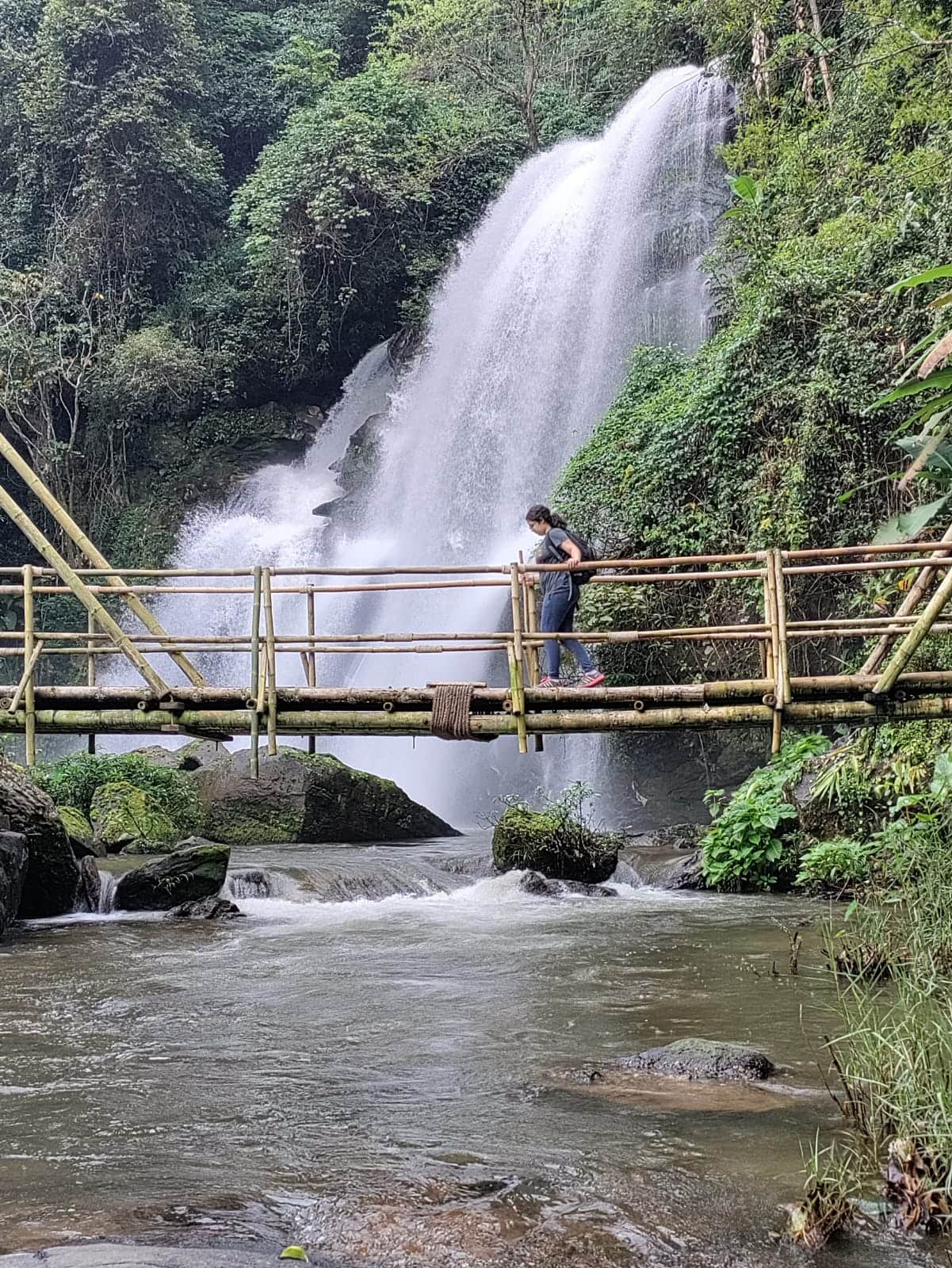
Take a refreshing dip and soak in the cascading beauty of Bua Tong Waterfalls, a favorite with both locals and travelers. These falls—also known as the Sticky Waterfalls—totally earn their name in a weirdly awesome way. Located in Sri Lanna National Park, about a 1.5-hour drive north of Chiang Mai’s Old City, this natural wonder is a perfect escape and a chance to try something truly different.
So what’s the big deal?
The “sticky” effect: Unlike typical waterfalls with slick rocks, Bua Tong flows over limestone formations rich in mineral deposits—especially calcium carbonate. That mineral coating creates a slightly rough, almost grippy texture when wet, so you can climb and walk right up the running water! It feels more like a natural water slide than a classic waterfall. Fun, refreshing, and surrounded by lush green rainforest scenery.
Location: About 60 km north of Chiang Mai (best with a car or motorbike).
Who it’s for: Nature lovers looking for a refreshing getaway. Great for families.
Cost: Small entrance fee.
Practical info: Open daily. Facilities like changing rooms and restaurants are available.
Tips: Get there early.
How much time: Half-day trip.
Best time to visit: During the rainy season (July–October) for the most impressive waterfalls
🐘 You can find 24 more great attractions in Chiang Mai here…
8. Grand Canyon Water Park
Go cool off and have a blast at Grand Canyon Water Park. Expect exciting slides, a lazy river, wave pools, and kid-friendly play areas.
Sure, the Grand Canyon National Park in the U.S. might be the first thing that comes to mind—but Chiang Mai has its own Grand Canyon Water Park, serving up a seriously fun day for all ages. This 33-rai water park is a popular spot for locals and tourists looking for a full day of sunshine-and-splashes.
Location: About 20 km outside Chiang Mai city center (Mae Rim district)
What you’ll find there:
A variety of slides and water activities: Get your adrenaline fix on the park’s unique giant slides, including the “Free Fall” and “Body Slide.” Float your worries away down the “Lazy River,” or challenge your friends on the speedy “Mat Racer.” For younger kids, a dedicated “Kid Zone” offers a safe, entertaining setup with age-appropriate slides and water features.
A unique inflatable obstacle course floating on the water: The centerpiece here is a massive floating inflatable obstacle course, where you can tackle a connected series of slides, jumps, climbs, and challenges.
Cliff jumping and zip lines: For the truly adventurous, there’s a cliff-jumping platform with different heights to match different comfort levels. The park also has a zip-line course so you can fly over the water for a bird’s-eye view of the park.
Chill time: The park has dedicated relaxation areas and lounge chairs available around the pools.
More activities: You’ll also find things like kayaking, canoeing, and even wakeboarding.
Family-friendly vibe: With a dedicated kids’ zone, on-duty lifeguards, and water features for different ages, Grand Canyon Water Park is a great option for families traveling with children.
Helpful info:
Opening hours: The park is usually open daily from 10:00 to 18:00, but it’s smart to check the official website or their social media pages for updates.
Admission: Ticket prices vary by season, age group, and the package you choose (entry only vs. packages that include meals or activities). Buying online may come with discounts.
What to bring: Wear comfortable swimwear, waterproof sunscreen, a hat, sunglasses, and sandals or water shoes. Lockers and basic facilities are available to rent at the park. Bring a refillable water bottle and some snacks, since food options can be limited.
Read here about Chiang Mai with kids…
Here’s what’s waiting for you at the park.. 🙂